 How-to
How to Safely Remove Moss from Roof Tiles: A Step-by-Step Guide
Last Updated: November 5, 2026
Quick Summary
To remove moss from roof tiles safely, dry brush the loose growth first, then apply a treatment labelled safe for roof tiles and let it kill the moss before brushing off the dead material. Rinse gently with a hose on a low setting, and avoid high-pressure washing, which can crack tiles and damage the roof.
- Stop and call a professional if the roof is wet, icy, windy or has loose, cracked tiles.
- Dry brush with a stiff yard brush first, avoiding metal tools that can chip the tile glaze.
- Let the treatment work until the moss turns brown or grey before brushing it off.
- Rinse with a hose on a low setting, working from top to bottom, and check for missed patches.
- Trim overhanging branches and clear gutters to reduce the damp, shaded conditions moss needs.
Table of Contents
- Why Moss Grows on Roof Tiles and When It Signals a Bigger Problem
- Safety Checklist, Tools and Materials You Need Before Working at Height
- Step-by-Step: How to Remove Moss from Roof Tiles Safely
- Is Pressure Washing a Roof Safe for Your Tiles?
- How to Prevent Moss Growing Back on Roof Tiles
- How Often Should You Remove Moss from a Roof and Booking Your Roof Clean
- Frequently Asked Questions
Why Moss Grows on Roof Tiles and When It Signals a Bigger Problem
Moss on roof tiles is a common sight across the UK, and learning how to remove moss from roof tiles matters because it is more than a cosmetic issue.
Moss needs damp, shaded conditions to spread. Tiles that stay wet after rain give it the moisture it needs to take hold. Over time, the growth lifts and loosens the tile edges and traps debris that feeds more growth.
Assessing Moss Growth and Roof Condition Before You Start
Before you touch the roof, look at how far the growth has spread and how the tiles are holding up. Check the following:
- Coverage: Is the moss in small patches or across whole slopes?
- Tile condition: Look for cracked, slipped or lifted tiles.
- Gutters and drainage: Look for overflowing gutters or stains on the fascia.
- Access: Can you reach the roof safely from a ladder, or does it need a professional?
Heavy growth, loose tiles or steep pitches are signs to call in a specialist rather than attempt the job yourself.
Safety Checklist, Tools and Materials You Need Before Working at Height
Working on a roof is the highest-risk part of this job, and most injuries happen on short ladders close to the ground rather than on high roofs. Use the following as a stop-or-go checklist before you climb.
When not to climb onto the roof
Do not go up if any of the following apply:
- The roof is wet, icy, frosty or covered in moss that hides the surface.
- Wind is strong enough to affect your balance or move the ladder.
- The pitch is steep, or the roof covering is fragile, such as old slate, felt or rooflights.
- You cannot see the roof edge clearly or the gutters are overflowing.
- You are working alone, or no one is available to foot the ladder.
If you answer yes to any of these, stop and seek a professional. A roofer or exterior cleaning specialist can usually provide the access equipment and harnesses needed to work safely.
Using access equipment safely
- Use a ladder rated for the load, placed on firm, level ground and secured at the top where possible.
- The ladder should extend at least three rungs above the roof edge so you have a handhold when stepping off.
- Keep the ladder at a safe angle, roughly one unit out for every four units up (Safe use of ladders and stepladders).
- Have someone foot the ladder at the base for the whole time you are up.
- Never overreach or lean sideways; move the ladder instead.
Personal protective equipment
Wear non-slip footwear, eye protection and gloves. If you are using a treatment, follow the label for gloves and eye protection, and keep the product away from your skin and face. Do not wear loose clothing that can catch on the ladder or tiles.
Tools and materials
- A stiff-bristled yard brush with a long handle
- A plastic scraper for stubborn growth
- A pump sprayer or watering can for treatment
- A moss treatment labelled safe for roof tiles
- A soft brush and a hose for gentle rinsing
Protect the surroundings before you start
Cover or move plants, furniture and anything below the working area. Direct runoff away from drains, ponds and watercourses, and never tip treatment residue down a drain. Keep pets and children clear of the area until surfaces are dry.
Watch out: if a tile moves, cracks or feels soft underfoot, stop immediately. Continuing to work on a failing roof is how minor moss jobs turn into tile replacements or falls.
Step-by-Step: How to Remove Moss from Roof Tiles Safely
Work in small sections so you can control the process and avoid damaging the tiles.
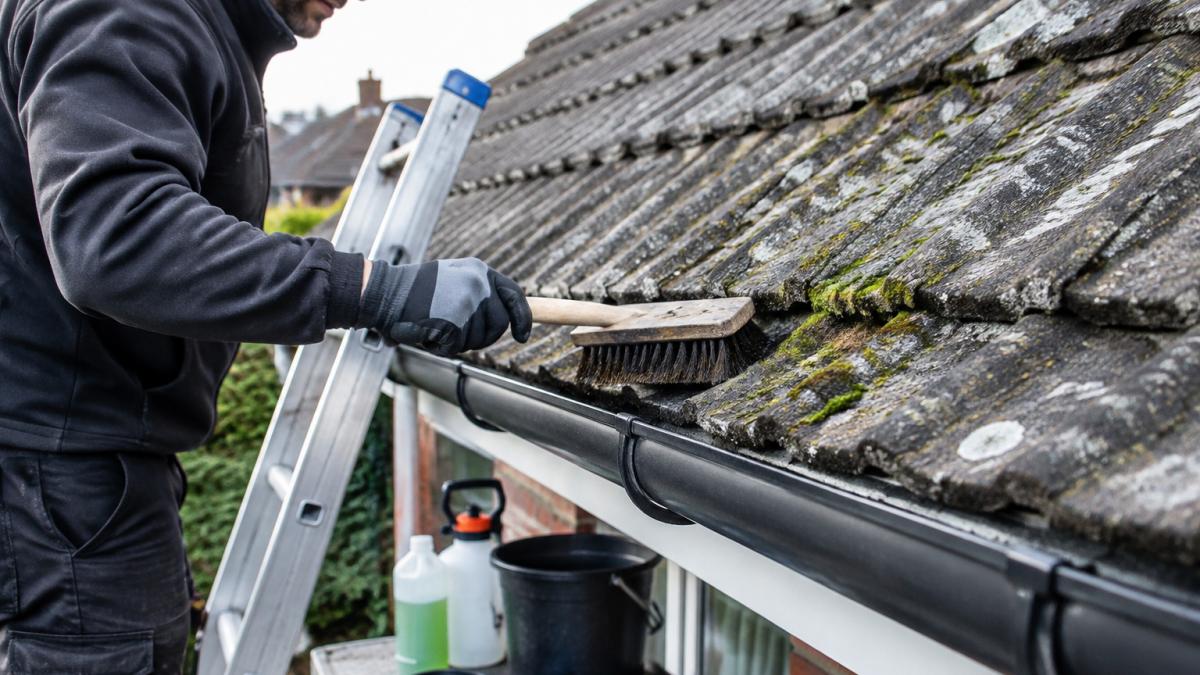
- Dry brush the loose moss. Remove the bulk of the growth first.
- Apply the treatment. Spray the affected tiles evenly and let it sit for the time on the label.
- Wait for the moss to die. Dead moss turns brown or grey and loosens.
- Brush off the dead growth. Use a soft motion to avoid cracking tiles.
- Rinse gently. Use a hose on a low setting, working from top to bottom.
- Check your work. Look for missed patches and repeat on those areas only.
Dry Brushing and Scraping Moss from Tiles
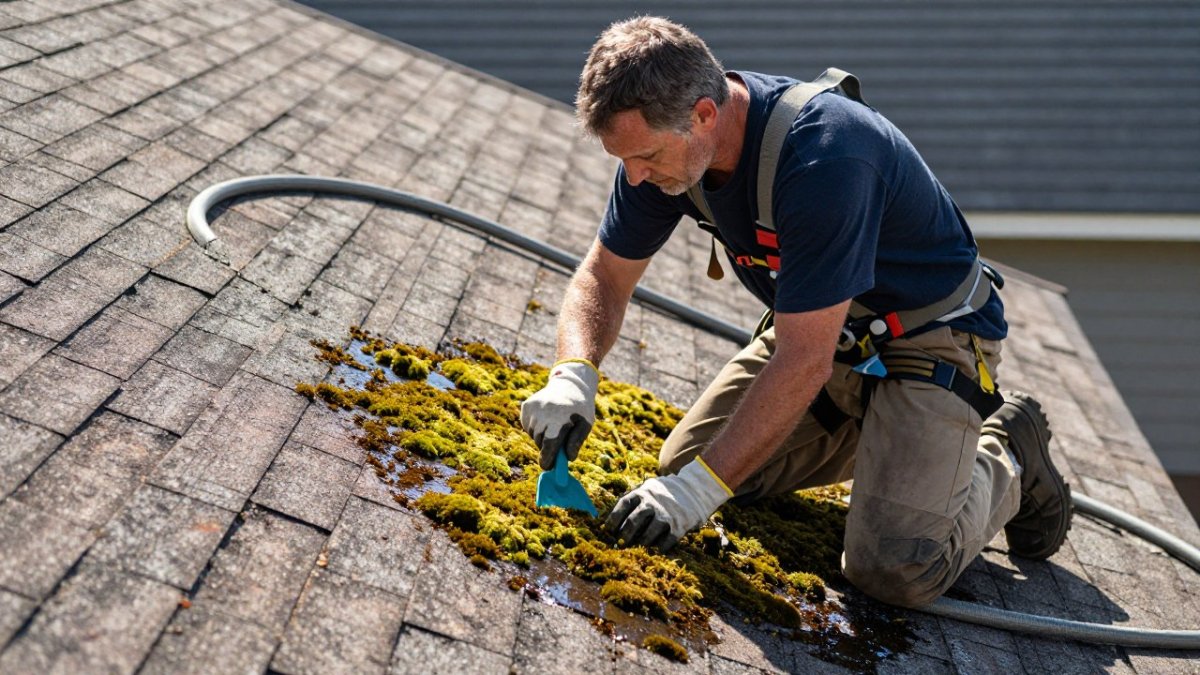
Dry brushing is the safest first step. Use a stiff yard brush and work in the direction of the tile ridges. Avoid scraping with metal tools, which can chip the glaze.
Scraping can help with stubborn growth in corners and along ridges. Use a plastic scraper and keep the pressure light. If a tile moves or cracks, stop and call a professional.
Choosing a Treatment by Tile Material and Roof Condition
Not every treatment suits every roof. Consider the following:
- Concrete tiles: Often handle standard moss treatments well, but check the label.
- Clay tiles: Can be more porous, so use a milder product and test a small area first.
- Older or fragile roofs: Choose a gentle treatment and avoid high-pressure methods.
- Natural options: White vinegar or soda solutions can work on light growth, but they may take longer and need repeat applications.
Treatment times vary by product, so follow the label and do not rush to brush off growth that is still green.
The steps below summarise the removal process in order, so you can see what to do at each stage.
| Step | What to do | Time or frequency |
|---|---|---|
| Dry brush | Remove the bulk of loose moss | Before treatment |
| Apply treatment | Spray tiles evenly | As the label directs |
| Wait | Let the moss die | Until it turns brown or grey |
| Brush off | Remove dead growth softly | After dying |
| Rinse | Hose on low setting, top to bottom | After brushing |
| Check | Repeat on missed patches only | Final step |
Is Pressure Washing a Roof Safe for Your Tiles?
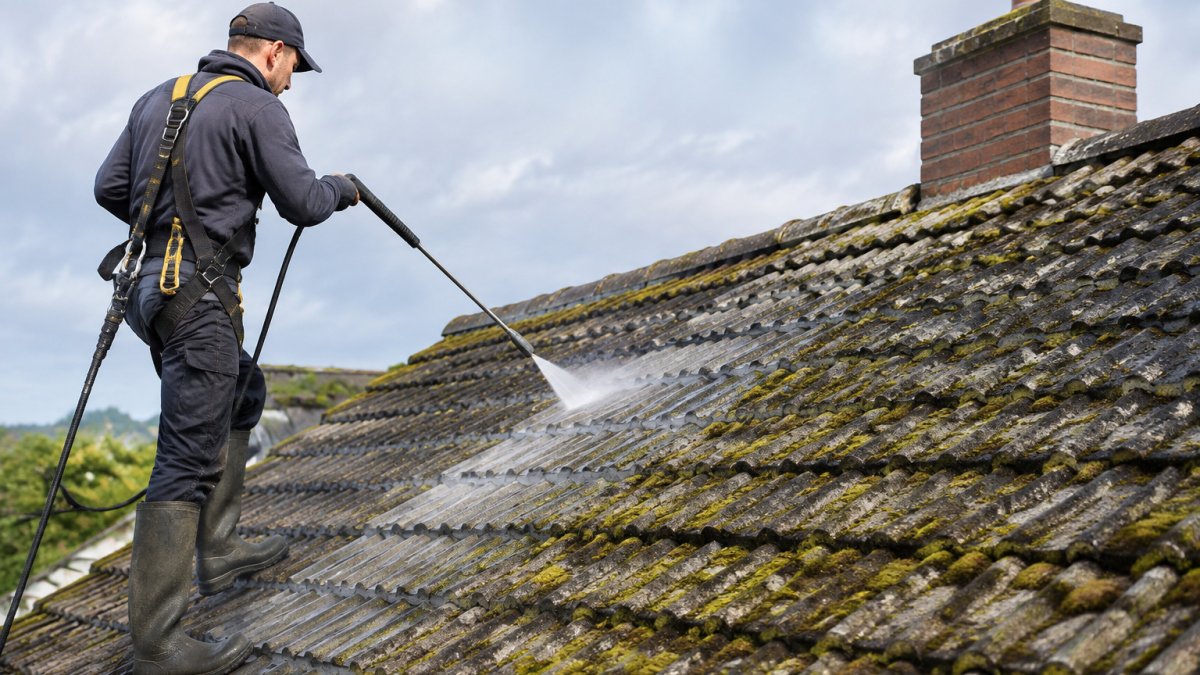
Pressure washing is not recommended for most roof tiles. High pressure can strip protective coatings, crack tiles and push water under the tile edges. It can also damage gutters and fascias.
Many roof cleaners prefer low-pressure or soft-wash methods because they clean without forcing water into the roof structure. If you are unsure, ask a professional for advice before using a pressure washer.
How to Prevent Moss Growing Back on Roof Tiles
Moss returns when conditions stay damp and shaded. Prevention focuses on reducing moisture and debris:
- Trim overhanging branches to let more sun and air reach the roof.
- Clear leaves and debris from gutters and valleys.
- Check gutters regularly so water drains away from the roof.
- Consider a zinc or copper strip near the ridge, which can slow regrowth, though results vary.
Each option has trade-offs. Tree trimming can cost money and needs a skilled operator, while strips only help in certain conditions.
How Often Should You Remove Moss from a Roof and Booking Your Roof Clean
How often you clean depends on your roof's exposure and how quickly moss returns. Many homeowners check their roofs once a year and clean when growth becomes visible.
If you want the job done safely and thoroughly, The roof cleaner offers professional roof cleaning and moss removal, along with gutter, fascia and soffit cleaning. If you are unsure whether your roof needs a specialist, see the signs that it is time to call in a professional.
Frequently Asked Questions
How do you safely remove moss from roof tiles?
Start with a safety check: use a sturdy ladder secured at the top, wear non-slip footwear and a harness if you are working above a steep pitch, and never stand on fragile or cracked tiles. Dry brush loose moss with a stiff yard brush working downhill, then apply a diluted moss treatment or a white vinegar solution with a spray bottle. Rinse gently with a low-pressure hose, and keep runoff away from gutters, plants and drains. Work in dry weather so the treatment bonds properly, and allow it to act for the time given on the product label before rinsing.
Is it safe to pressure wash roof tiles?
Pressure washing is risky on most roof tiles. High-pressure jets can strip the protective surface coating, loosen mortar and bedding, and force water under tiles, which can lead to leaks and damage that costs far more than the clean itself. Gentle low-pressure rinsing combined with brushing and a suitable treatment is the safer approach. If you are considering pressure washing, ask a professional roof cleaner how they will protect your specific tile type before any work begins.
Can moss damage roof tiles?
Moss does not usually destroy tiles on its own, but it holds moisture against the surface for long periods. Over time this can encourage slipping, block roof drainage and push water back under the tiles, which may contribute to leaks and gutter overflow. Thick moss growth is often a sign that the roof needs inspection, particularly if tiles are cracked, displaced or sitting in shade.
How do you stop moss growing back on roof tiles?
Moss regrows where conditions stay damp and shaded, so reducing those conditions is the most effective long-term step. Trim overhanging branches to let more sunlight and air reach the roof, clear gutters and debris so water drains freely, and consider a zinc or copper strip near the ridge, which can slow regrowth. Regular checks and a treatment applied at the right time of year will help keep growth under control, although no option stops it completely.
Keeping your roof clear of moss protects your tiles, improves drainage and restores your home's appearance. If you would rather leave the job to experts, get in touch with The roof cleaner and book your roof clean today.