 How-to
How to Clean Fascias and Soffits Safely at Home
Table of Contents
- Why Clean Fascias and Soffits, and What Happens If You Don't
- Fascia and Soffit Cleaning Tools and Equipment You Need
- Best Cleaner for uPVC Fascias and Soffits and How to Dilute It
- Step-by-Step: How to Clean Fascias and Soffits Without Damage
- How to Remove Algae from Fascias and Soffits
- How Often to Clean Fascias and Soffits and Booking Your Next Clean
- Frequently Asked Questions
Why Clean Fascias and Soffits, and What Happens If You Don't
Learning how to clean fascias and soffits does more than improve the look of a house, because dirty ones do real damage over time.
Fascias are the boards that run along the edge of the roof, where the gutters are fixed. Soffits are the panels underneath the eaves.
If you leave them alone, a few things tend to happen:
- Algae and moss grow in the damp corners and spread along the edges
- Gutter overflow runs down and stains the fascia and wall below
- Cobwebs, nests and debris block airflow into the roof space
- Small cracks and soft spots go unnoticed until repairs get expensive
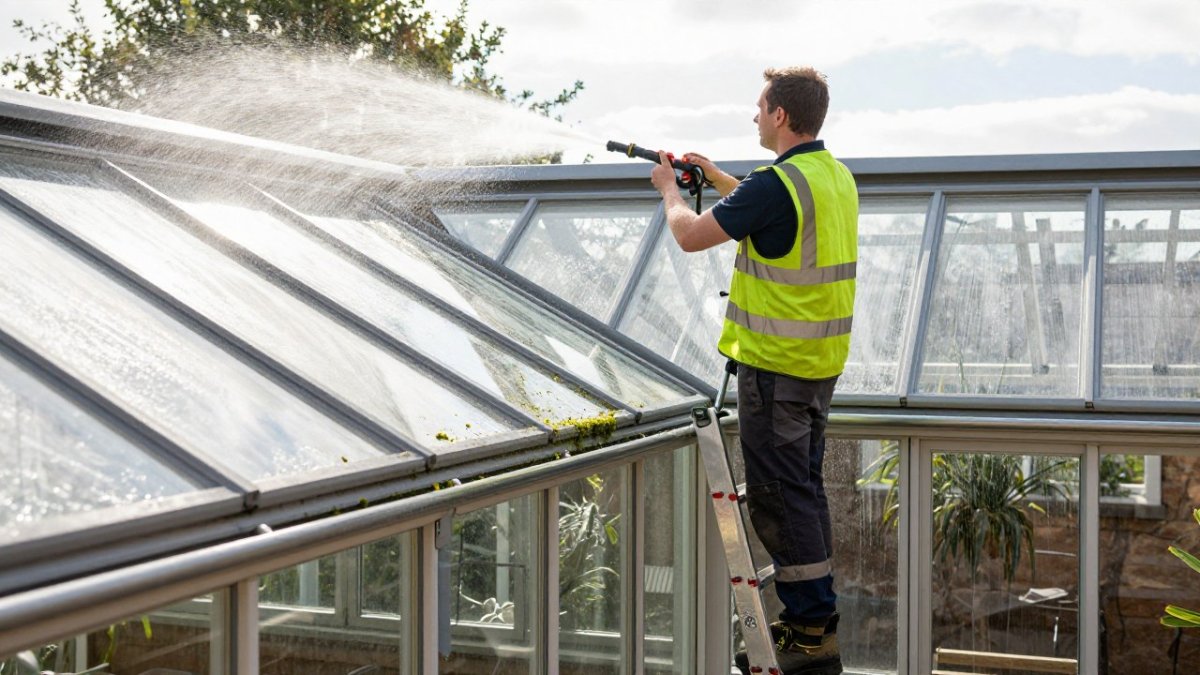
Watch out: Pressure washing can damage these surfaces. Blasting uPVC or old paint can strip the surface and force water behind the boards. You can read more about the specific risks of pressure washing roof tiles before deciding how to clean.
Fascia and Soffit Cleaning Tools and Equipment You Need
You do not need specialist kit for this job. Most of what you need is already in the shed or the kitchen.
- A soft-bristled brush or sponge, ideally with a long handle
- A bucket for the cleaning solution
- A pump sprayer or garden sprayer for applying the solution
- A hose with a gentle spray setting for rinsing
- A microfibre cloth or towel for drying
- A stable stepladder or platform, with someone nearby if possible
- Gloves, eye protection and old clothes
Avoid wire brushes, scourers and abrasive pads. They scratch uPVC and leave marks that attract dirt faster.
Best Cleaner for uPVC Fascias and Soffits and How to Dilute It
For most uPVC fascias and soffits, a mild cleaner is enough. A uPVC cleaner made for exterior use works well, and many homeowners also use a simple mix of warm water and washing-up liquid. White vinegar diluted in water can help with lighter staining, though it is best tested on a small hidden spot first.
For a basic solution, mix:
- Around 1 part mild washing-up liquid to 10 parts warm water
- Or follow the dilution on the uPVC cleaner label exactly
Do not mix different cleaners together. Some combinations give off harmful fumes. Use one product at a time and rinse the bucket between uses.
Watch out: Strong bleach or heavy-duty degreasers can dull or discolour uPVC. Use them only if the manufacturer says they are safe for the material.
Step-by-Step: How to Clean Fascias and Soffits Without Damage
Work on a dry, overcast day when the surfaces are cool and no rain is forecast. Cleaning in direct sun causes solution to dry before it can be rinsed, which leaves streaks. Start at the section closest to the ground and work upwards so dirty water never runs over cleaned boards.
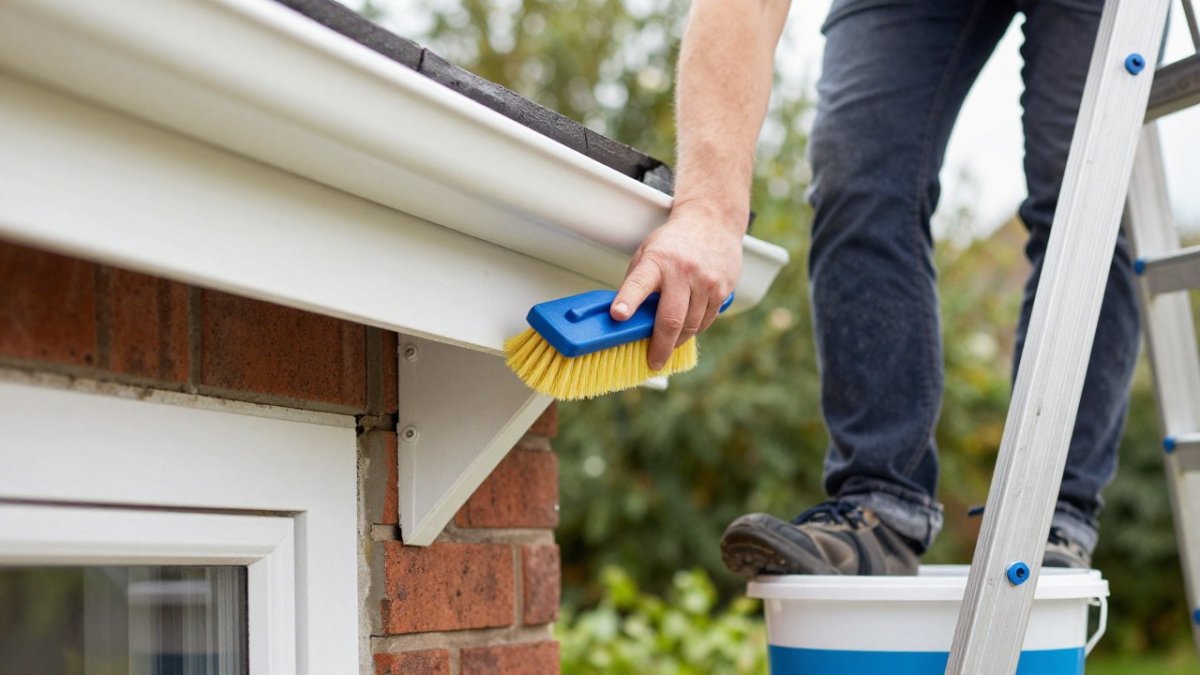
Preparing the Area and Working Safely at Height
Before you climb anything, set the job up properly.
- Clear the ground below and move plant pots, bins and garden furniture
- Check the ladder is on firm, level ground and is tied off or footed by a second person
- Keep your body centred on the ladder and never stretch sideways; move the ladder instead
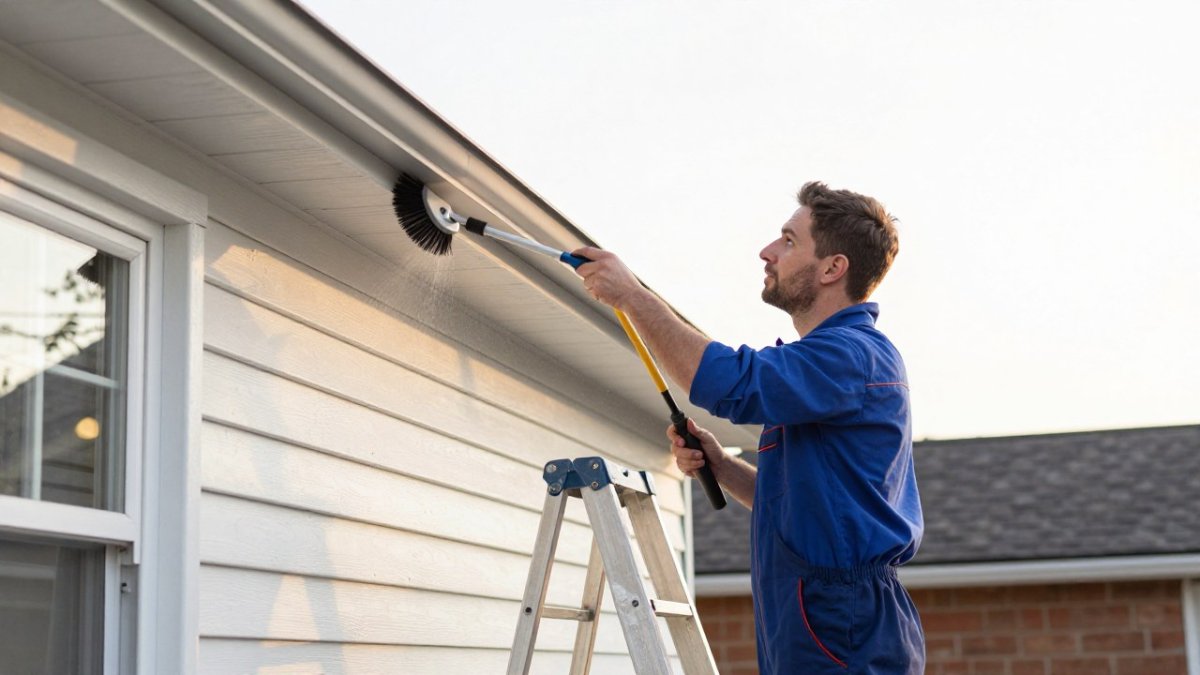
- Use a platform or a long-handled tool where possible to keep your feet on the ground
- Cover or move plants directly below the working area, and be ready to water them down afterwards
Sweep off loose dirt, cobwebs and leaves with a soft brush first. Rinse lightly with the hose so the solution can work properly.
Matching the Method to the Material
The right approach depends on what the boards are made of, and getting this wrong is where most damage happens.
- uPVC: Use a mild washing-up liquid solution or a dedicated uPVC exterior cleaner, a soft brush and a gentle rinse. Avoid abrasive pads and strong solvents, which dull the surface and leave it more prone to staining.
- Painted timber: Use the mildest solution that lifts the dirt and keep water away from bare or cracked edges. Check for flaking paint before you start; cleaning a failing coating can strip it further. Recoat any bare patches once the wood is dry.
- Aluminium: A mild soap solution and soft cloth are usually enough. Avoid anything abrasive, and do not let strong cleaners dwell, as they can affect the finish.
- Older or brittle surfaces: Test any product on a small hidden spot first and use the weakest dilution that works. If the surface feels chalky or looks crazed, clean gently and plan for repair rather than scrubbing harder.
Soft Washing, Rinsing and Drying
- Apply the cleaning solution from the bottom of the section upwards using the sprayer, so it does not run down onto dry areas
- Leave the solution to sit for the time stated on the product label, usually a few minutes; do not let it dry on the surface
- Gently brush the surface with the soft brush, following the direction of the boards
- Rinse from the top down with the hose on a gentle setting, so the dirty water runs away from the surface
- Wipe any remaining streaks with a dry microfibre cloth
Watch out: Pressure washing is the usual cause of damage here. Blasting uPVC or old paint can strip the surface, force water behind the boards and into the roof space, and dislodge seals. A hose, a soft brush and a mild solution will do the job without that risk.
Take your time at each stage. Rushing leads to missed patches and streaks.
How to Remove Algae from Fascias and Soffits
Green algae and black spots are common on the shaded side of the house. Most come off with the same cleaning method used above, but stubborn growth needs a more targeted approach.
- Green algae: Usually lifts with a mild washing-up liquid solution and a soft brush. Work it in gently, let it dwell for a few minutes, then rinse. Repeat on the affected area only rather than scrubbing harder.
- Black spots and mould: These often sit in the grain or micro-texture of the surface. A second pass with the same mild solution and a soft brush is usually more effective than a stronger chemical. If it persists, a product labelled for exterior mould on the relevant material is the safer choice than a home-made strong mix.
- Oxidation and chalky film: Common on older uPVC and aluminium, this is a breakdown of the surface itself rather than dirt. Gentle cleaning with a mild solution removes the loose film, but heavy scrubbing makes it worse. If the surface stays chalky after rinsing, it is a sign the material is ageing and may need repair or replacement rather than more cleaning.
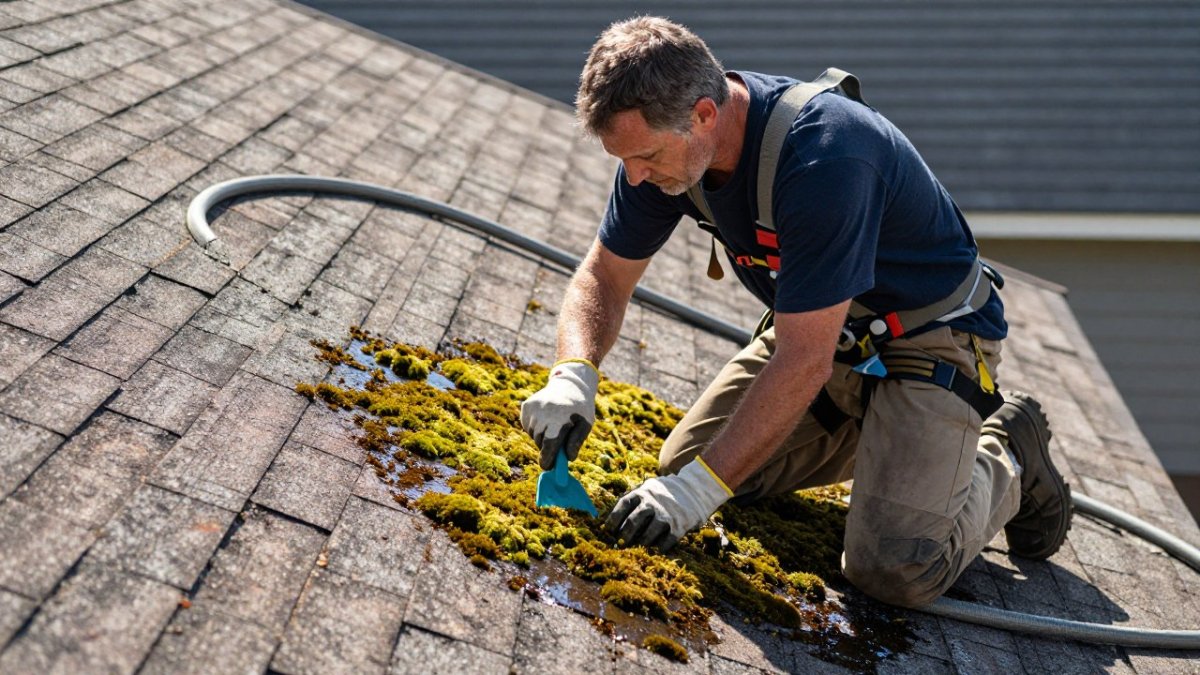
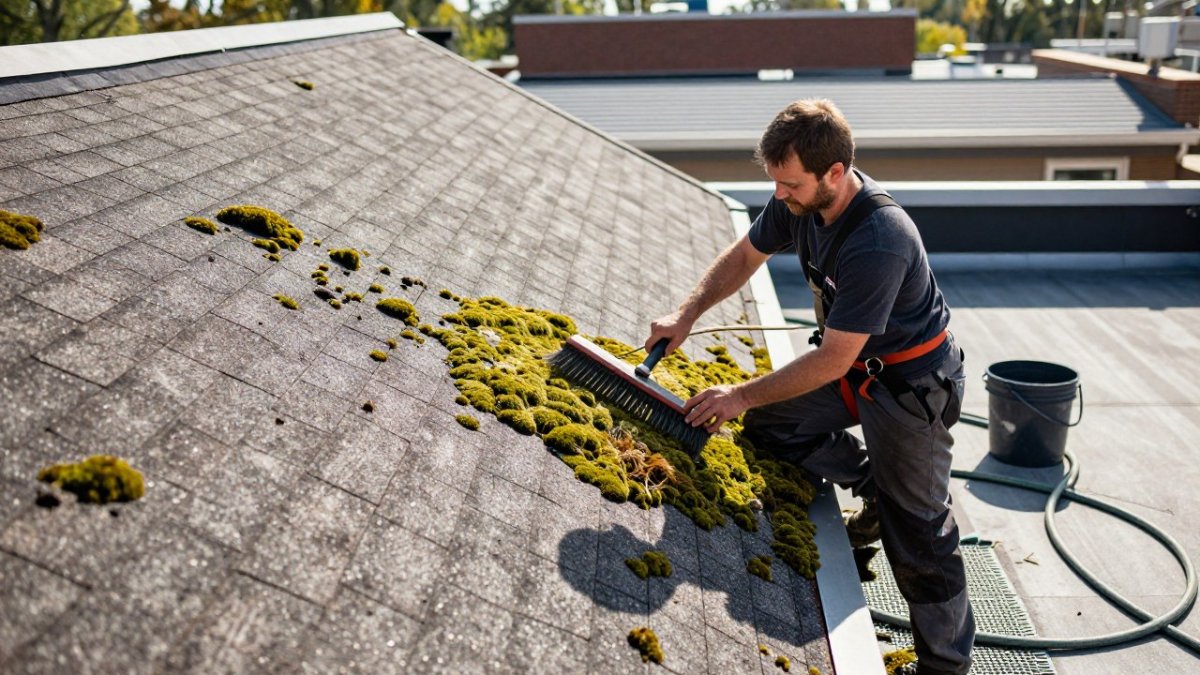
- Persistent growth: If algae returns quickly, the cause is usually shade, damp or overhanging branches. Trim back nearby growth, clear the gutters so water drains properly, and check that the soffit vents are not blocked. For more on stopping growth coming back, see steps to stop moss returning on your roof. Tackling the cause saves repeat cleaning.
Watch out: Strong bleach or heavy-duty degreasers can dull or discolour uPVC and damage painted timber, and runoff can harm plants below.
While you are up there, use the opportunity to inspect. Look for loose or cracked boards, failed seals around the fascia, blocked ventilation in the soffit and signs of water ingress such as staining or soft spots.
How Often to Clean Fascias and Soffits and Booking Your Next Clean
Most homes benefit from cleaning fascias and soffits once or twice a year, usually in spring and autumn. To plan your budget, see how much it costs to clean house gutters. Homes in damp, shaded or wooded areas may need it more often.
If the job feels too high, too awkward or too large, it may be time to get help. You can find out how to get a free roof cleaning quote in the UK.
Here is a quick guide to how often to clean fascias and soffits, based on the article.
| Situation | Suggested frequency | Note |
|---|---|---|
| Most homes | Once or twice a year | Usually spring and autumn |
| Damp, shaded or wooded areas | More often than most homes | Check after a wet winter |
| After a wet winter | Check soon after | Algae and staining tend to show |
Frequently Asked Questions
What is the best way to clean fascias and soffits?
Start by clearing loose dirt, cobwebs and debris with a soft brush. Then apply a mild cleaning solution, such as a uPVC cleaner diluted as the label directs or a small amount of washing-up liquid in warm water, and work top to bottom with a soft brush. Allow the solution a short dwell time, then rinse thoroughly with clean water from a hose or a low-pressure sprayer. Finish by wiping surfaces dry with a towel to reduce streaking and spotting. Avoid high-pressure washing, which can damage seals and joints.
Can you clean fascias and soffits with washing-up liquid?
Yes, for light soiling. A few drops of washing-up liquid in a bucket of warm water is often enough to lift grime and general dirt from uPVC fascias and soffits. Use a soft brush or sponge rather than anything abrasive, and rinse thoroughly so no residue is left to attract new dirt. For moss, algae or stubborn staining, a dedicated uPVC cleaner or a soft wash solution usually works better than washing-up liquid alone, and it is worth testing any product on a small hidden area first.
How often should fascias and soffits be cleaned?
Most homes benefit from cleaning fascias and soffits once or twice a year, typically in spring and autumn. Properties in shaded, damp or wooded areas, or near trees, may need cleaning more often because moss and green algae build up faster there. A visual check every few months will show whether dirt, algae or staining is starting to collect. Regular cleaning keeps the surfaces looking good and makes each clean quicker and gentler on the materials.
Is it safe to clean fascias and soffits from a ladder?
It can be, if you take precautions. Use a stable, level ladder on firm ground, and ask someone to foot it. Keep your weight centred between the stiles, never overreach, and avoid working in wet or windy conditions. Use a telescopic pole with a soft brush where possible, so you can keep both feet on the ladder. If the property is multi-storey, has a steep roof or the work would mean leaning far out, consider a professional who is trained and insured for work at height.