 How-to
Why Do My Gutters Keep Overflowing?
Quick Summary
Gutters keep overflowing because water is not draining away fast enough. The most common causes are a blocked downpipe or outlet, a section of gutter that has lost its fall towards the outlet, or gutter guards that are blocked or badly fitted. Why do my gutters keep overflowing? Usually something upstream is stopping the flow, so clearing the outlet and checking the pitch is the place to start.
- Blocked downpipes and outlets are the most common reason gutters overflow.
- Water standing in the gutter long after rain stops signals a blockage or poor pitch.
- Gutters need a slight fall towards the outlet, so check for dips on a dry day.
- Green or black streaks on the wall below the gutter are an early warning sign.
- Only work on a dry, calm day, and use a ladder that reaches three rungs above the gutter.
Table of Contents
- Why Gutters Overflow in Heavy Rain
- Spotting Blocked Downpipe Symptoms Early
- How to Fix Overflowing Gutters Step by Step
- How to Clean Gutters Safely
- Booking a Gutter Clear and Blockage Check
- Frequently Asked Questions
Why Gutters Overflow in Heavy Rain
Last Updated: November 14, 2026
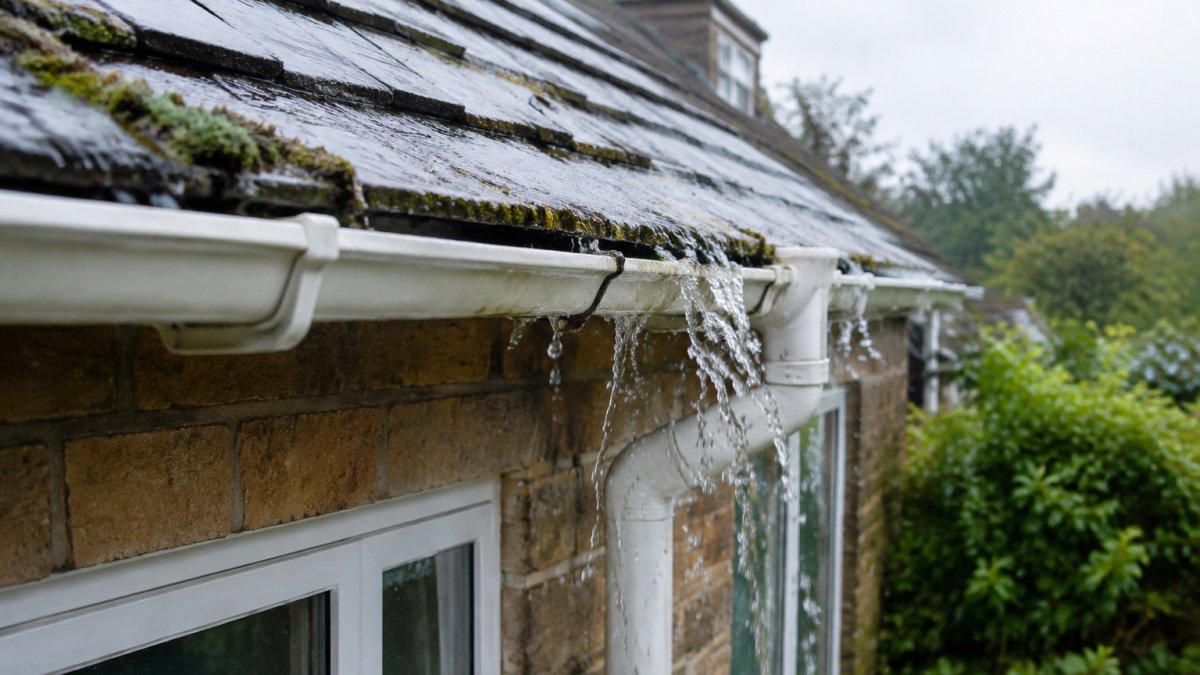
If your gutters keep overflowing, you are probably asking why do my gutters keep overflowing, and the answer is that water is not getting away from the roof fast enough. Most of the time the cause is a blocked outlet, a downpipe that has packed up with debris, or a run of gutter that no longer falls towards the outlet. Once water backs up, it spills over the front edge and runs down the fascia, the wall and sometimes into the foundations.
Why do my gutters keep overflowing? The short answer is that the system cannot carry the volume of rain falling on the roof. A clear, correctly fitted gutter copes with normal rainfall without any trouble. When it fills, something upstream is stopping the flow.
Gutters that overflow usually come down to the same few faults. Here is what to check.
Blocked downpipes and outlets
A blocked downpipe is the most common reason gutters overflow. Leaves, moss, grit and small twigs collect at the outlet, where the water turns into the pipe. Once that junction jams, the gutter has nowhere to drain.
- Look for water pouring over the gutter during rain, not just dripping
- Check whether water stands in the gutter for a long time after the rain stops
- Listen for a gurgling sound from the downpipe when it rains
Watch out: do not push a rod up a downpipe from the ground without checking for live wires or unstable ladders first.
Incorrect gutter pitch or slope
Gutters need a slight fall towards the outlet. If a section is level or sags in the middle, water collects there. The pool gets deeper until it spills over the lowest point.
- Stand back and look along the gutter line on a dry day
- Check for dips where water sits after rain
- Look for brackets that have pulled away from the fascia
Spotting Blocked Downpipe Symptoms Early
Catching a blockage early saves a lot of damage. The signs usually appear before the gutter starts spilling. Water staining on the wall beneath the gutter is often the first clue.
Other warning signs include:
- Green or black streaks on the render or brick below the gutter
- Damp patches or peeling paint on the fascia board
- Plants or moss growing in the gutter itself
- Water running down the outside of the downpipe, not inside it
If you see any of these, act quickly. Persistent water running against a wall can lead to damp inside the house over time.
How to Fix Overflowing Gutters Step by Step
Most overflowing gutters can be fixed in a morning with basic tools. Work through these steps in order.
- Check the weather. Only work on a dry, calm day.
- Set up a stable ladder on firm ground, following the manufacturer's guidance.
- Remove loose debris from the gutter by hand, wearing gloves.
- Clear the outlet and the top of the downpipe.
- Flush the gutter with a hose from the high end to confirm the water runs freely.
- Watch the outlet for a steady flow. Water should drain away without pooling.
If water still sits in one section, check the pitch. Re-fixing a bracket or packing a hanger can often correct a small dip.
Checking for sagging, loose sections and gutter guard interference
Gutter guards are a common cause of overflow that many homeowners miss. A guard that is fitted badly or fills with fine grit can stop water entering the gutter at all. Water then runs over the top of the guard instead.
- Look for sections that sag or pull away from the fascia
- Check that guards sit flat and are not blocked with compacted material
- Tighten or replace loose brackets and hangers
Where a guard is fitted correctly and still overflows, the guard may be too small for the roof area it serves. In that case the gutter size itself is the problem, and a professional assessment will show whether the system needs upgrading.
The steps below summarise the repair sequence, so you can follow them in order on the day.
| Step | What to do | Time or frequency |
|---|---|---|
| Check the weather | Only work on a dry, calm day | Before starting |
| Set up ladder | Place on firm ground per manufacturer guidance | Before climbing |
| Remove debris | Clear loose debris by hand, wearing gloves | During the job |
| Clear outlet | Clear the outlet and top of the downpipe | During the job |
| Flush gutter | Run a hose from the high end | During the job |
| Watch outlet | Confirm steady flow with no pooling | After flushing |
How to Clean Gutters Safely
Gutter cleaning is one of the most dangerous jobs a homeowner tackles. Safety comes first when working at height.
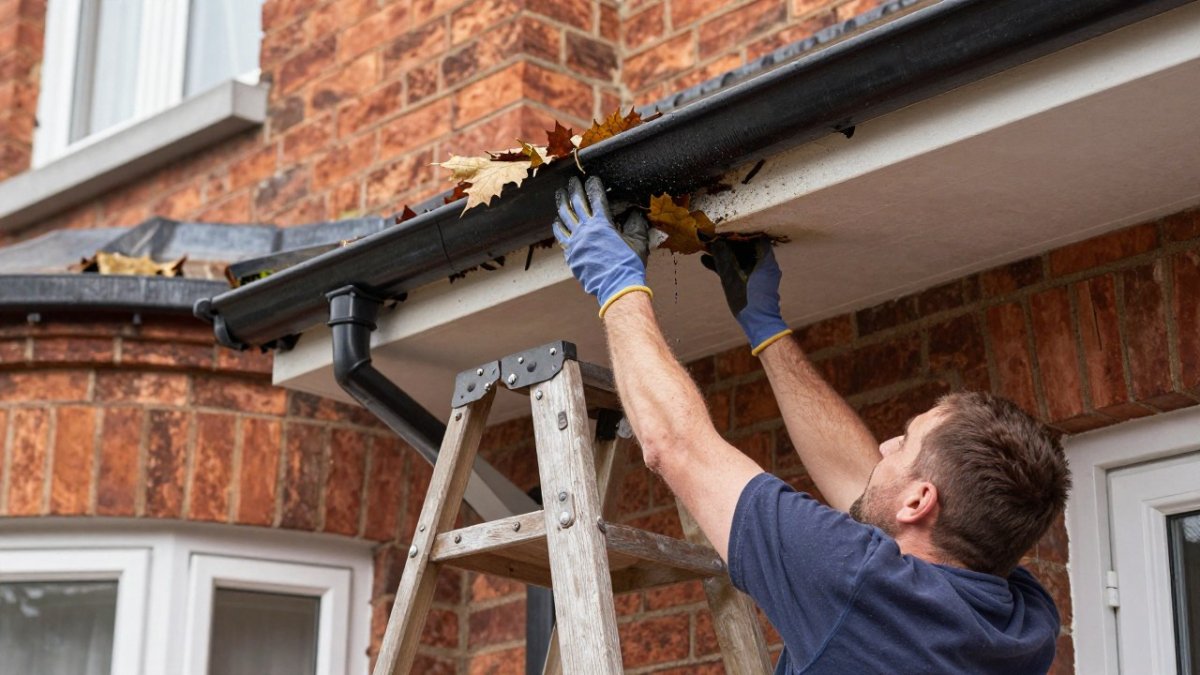
Good practice includes:
- Using a ladder that reaches at least three rungs above the gutter
- Having someone hold the ladder or using a secure stabiliser
- Working from the inside of the ladder, never leaning out to the side
- Avoiding wet or frosty conditions
A common mistake is clearing gutters with a pressure washer. Force can split joints and push debris further into the downpipe.
Booking a Gutter Clear and Blockage Check
If you have tried the steps above and the gutters still overflow, a professional check is the sensible next step.
If you are ready to book, the roof cleaner offers gutter cleaning as part of its exterior cleaning services, including gutters, fascias and soffits. You can see how long a quote takes before you commit. Our team is fully experienced, trained, and insured, and works with registered waste carriers. Read on to see how to get a free quote for the work. We offer a satisfaction guarantee: if you are not fully satisfied, you do not pay. Check what a gutter clear typically costs before you decide. Get in touch to book a gutter clean and stop the overflow before the next heavy rain.
Frequently Asked Questions
Why do my gutters keep overflowing even when they are clean?
If the gutters look clear, the blockage is often lower down, in the downpipe or outlet, where debris collects out of sight. Gutters can also overflow if the pitch is wrong, so water pools at one end instead of flowing towards the downpipe. Check whether water runs to the outlet or sits in the trough, and look for sagging sections that hold water. A blocked downpipe can be confirmed by running a hose into the top of it and watching whether the water drains freely at the bottom.
Can blocked downpipes cause gutters to overflow?
Yes. A downpipe blocked with leaves, moss or silt stops the gutter draining, so water backs up along the trough and spills over the front edge or outlet joint. Signs include water running down the wall below the gutter, damp fascias and a gurgling sound during rain. Clearing the downpipe from the top usually solves the problem. If the outlet itself is cracked or disconnected, it will need replacing.
How do I stop my gutters from overflowing in heavy rain?
Start by clearing debris from the gutters and downpipes, then check the fall of the gutter. A gutter should slope gently towards the outlet. Tighten or replace brackets that have let sections sag, and make sure the outlets are not restricted. If the system is simply too small for your roof area and the rainfall in your area, Gutter guards can help keep debris out, but check they are not themselves restricting flow.
When should I call a professional to fix overflowing gutters?
Call a professional if the gutters are high, the roof is steep or fragile, or the problem keeps returning after you have cleared the blockage. Overflowing that has caused damp walls, rot in fascias or staining needs a proper inspection, and Make sure any contractor is fully insured before they work at height.