 How-to
7 Steps to Stop Moss Returning on Your Roof
Quick Summary
To stop moss returning on a roof, change the conditions moss needs: remove existing growth with a gentle brush-and-rinse clean, keep debris and gutters clear so water runs off, and reapply treatment when fresh green growth appears. Moss returns wherever a roof stays damp, shaded and out of the sun, so cleaning alone is not enough.
- Remove existing moss first, because prevention only works on a clean roof.
- Brush gently top-down with a soft, long-handled brush, avoiding high-pressure washers.
- Let the roof dry for several dry days before applying any treatment.
- Inspect the roof and gutters in spring and autumn, reapplying treatment when fresh growth appears.
- If moss keeps returning to one patch, check for damaged tiles, failed flashing or blocked valleys.
Table of Contents
- Why Does Moss Grow on Roofs in the First Place?
- Step-by-Step: Removing Existing Moss Before Prevention
- Booking Your Roof Clean and Moss Prevention Check
- Frequently Asked Questions
Why Does Moss Grow on Roofs in the First Place?
Last Updated: November 19, 2026
Moss returns wherever a roof stays damp, shaded and out of the sun. To stop moss returning on roof surfaces you need to change those conditions, not just scrub the tiles.
Spores travel on wind and settle on tiles, growing only where they find moisture and shade.
Step-by-Step: Removing Existing Moss Before Prevention
Prevention only works on a clean roof, so remove existing moss first using a method that suits your tile or shingle.
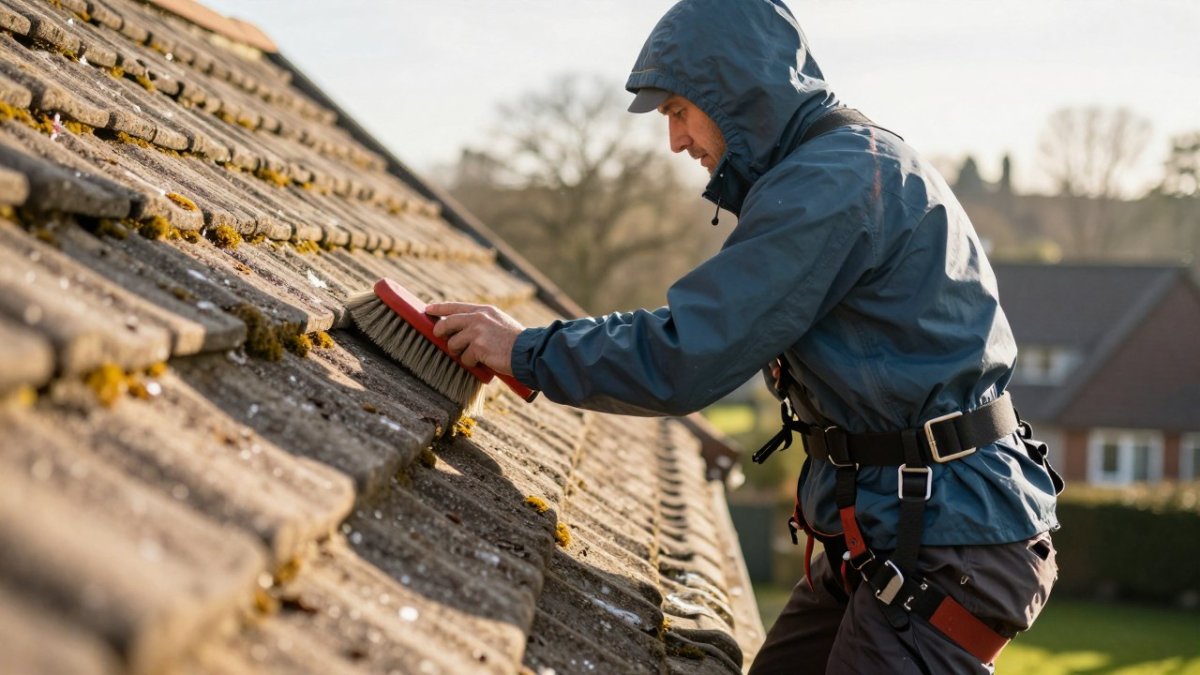
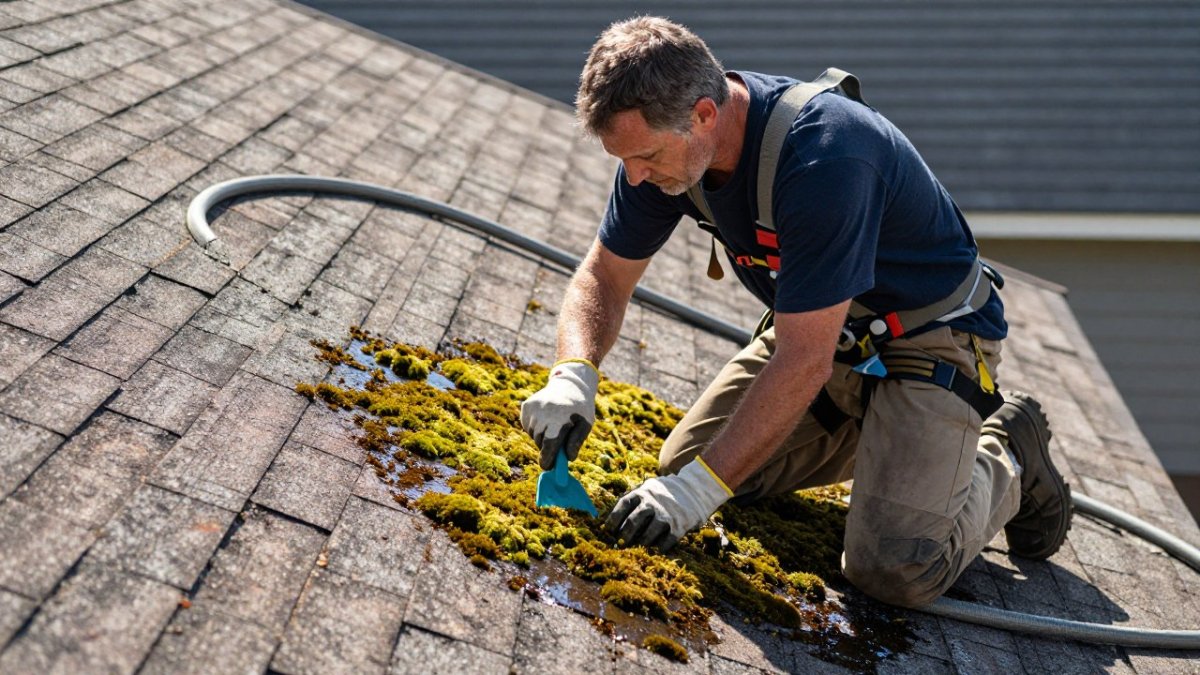
- Check the roof is safe to access. Use a secure ladder on firm ground, keep three points of contact, and use a harness on a steep pitch (Construction - Work at height). Never walk a wet or frosty roof.
- Match the method to the roof material. Use a method suited to your roof material, and take care with brittle surfaces.
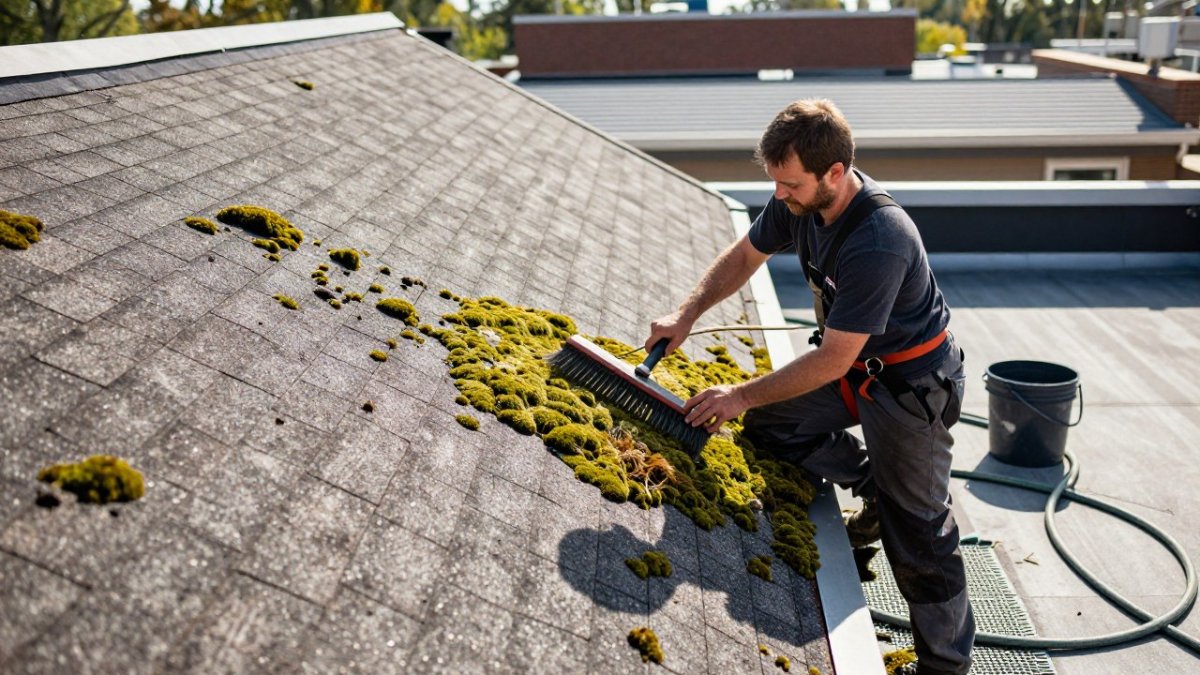
- Brush gently, working top-down with a soft, long-handled brush.
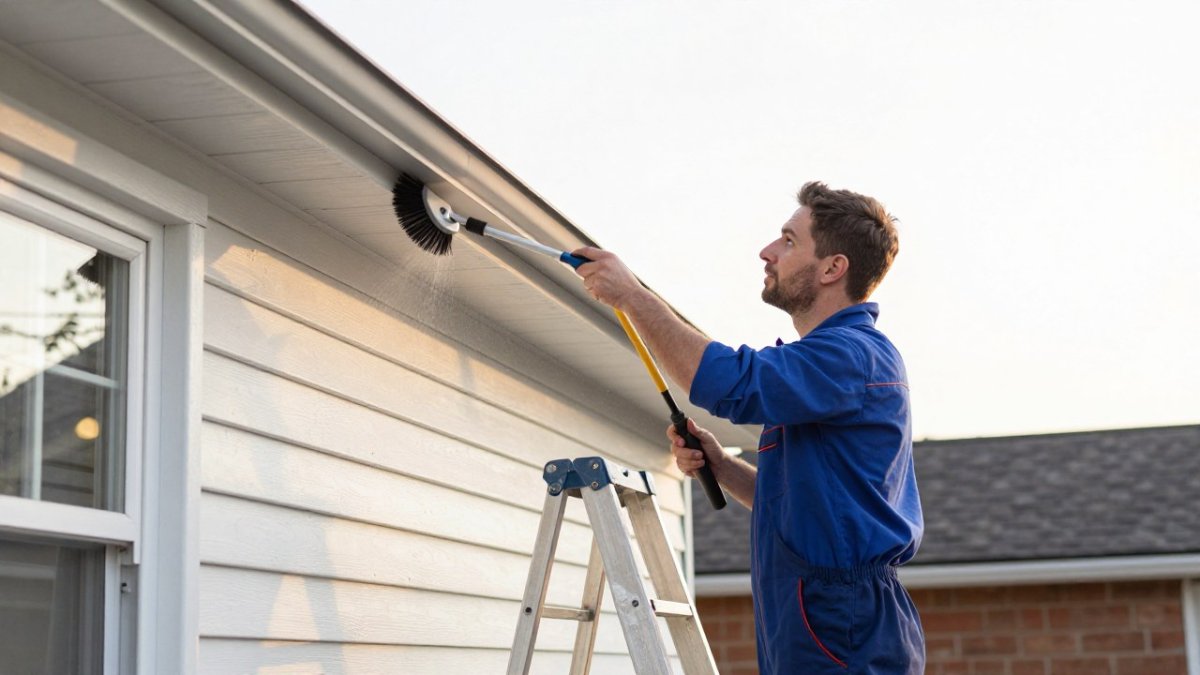
- Clear debris as you go from valleys, outlets, gutters and downpipes so water can run off.
- Rinse lightly with a garden hose; avoid high-pressure washers, which strip coatings and force water under tiles.
- Let the roof dry for several dry days before applying any treatment.
Watch out: Pressure washing can strip protective coatings and damage roof tiles, so avoid it. Learn the risks of pressure washing roof tiles and how to avoid them.
If you use a chemical moss treatment, choose a product labelled for roof use and follow the dose on the pack. Wear gloves, eye protection and a mask, keep pets and children away from runoff, and direct runoff away from lawns, borders, ponds and drains. Treatments are typically applied in dry, mild weather, and dead moss may need a second gentle brush once dried.
A careful brush-and-rinse clean may be enough for light growth; heavy coverage or a fragile roof may need professional help.
The steps below summarise the removal process before any prevention work begins.
| Step | What to do | Time or frequency |
|---|---|---|
| Check roof is safe | Use secure ladder, three points of contact, harness on steep pitch | Before starting |
| Match method to material | Choose method suited to tile or shingle | Before cleaning |
| Brush gently | Soft, long-handled brush, working top-down | As you work |
| Clear debris | Clear valleys, outlets, gutters and downpipes | As you go |
| Rinse lightly | Garden hose; avoid high-pressure washers | During cleaning |
| Let roof dry | Allow several dry days before any treatment | Several dry days |
Booking Your Roof Clean and Moss Prevention Check
Prevention is not a one-off job, and no treatment stops moss permanently. What works is a realistic schedule plus knowing when a recurring problem points to something cleaning cannot fix.
A realistic prevention timeline. Inspect the roof and gutters in spring and autumn, and reapply treatment when you see fresh green growth.
Comparing prevention methods. Manual brushing and rinsing is the lowest-cost, safest option for fragile tiles but does nothing to slow regrowth.
When recurring moss signals a roof problem. If moss keeps returning to the same patch despite cleaning, look for damaged or slipped tiles, failed flashing, blocked valleys or gutters, or poor ventilation keeping the roof structure damp. A roofer should assess these before you spend more on treatments.
When to hire a professional. Steep or fragile roofs, heights you cannot reach safely, heavy growth, or any sign of damaged tiles or damp inside the property are all reasons to bring in a professional. Fall risk is the main hazard.
If you would rather not do this yourself, or the roof is steep or hard to reach, a professional clean may be the safer choice. Our team at The roof cleaner is fully insured, experienced with difficult roofs, and equipped to safely access hard-to-reach areas. Our service also includes gutter clearing. For current prices and a quote for your property, contact The roof cleaner directly. Find out how to get a free roof cleaning quote in the UK. Costs depend on the size and pitch of the roof, so we cannot give a fixed figure here. See what professional roof moss removal typically costs in the UK.
Book Service to get a clear quote and a prevention plan for your roof.
Frequently Asked Questions
Why does moss keep coming back on my roof?
Moss returns when the roof stays damp and shaded, with spores settling on tiles that never dry out. Overhanging branches, blocked gutters and north-facing slopes are common causes. Clearing those factors and removing the existing growth gives moss far fewer places to re-establish, which is why prevention works best as a combined approach rather than a single treatment.
Do zinc strips for roof moss actually work?
Zinc strips are sometimes fitted near the ridge as a supporting measure alongside trimmed trees and clear drainage. Check that the fixings and flashing are sound before fitting anything to the roof.
How often should I clean my roof to stop moss returning?
Regular inspection is sensible, and cleaning frequency depends on shading and surrounding vegetation. Pricing depends on the size and pitch of the roof, so request a quote from The roof cleaner for current figures tailored to your property.