 How-to
Risks of Pressure Washing Roof Tiles and How to Avoid Them
Last Updated: November 12, 2026
Quick Summary
Pressure washing roof tiles can crack, loosen or chip them, strip protective coatings and force water under the laps, so leaks may appear months later. Soft washing with a low-pressure flow and a suitable treatment is generally the safer way to remove moss from tiled roofs.
- Concentrated jets can lift tile edges, erode surfaces and push water under tile laps.
- Damage is often cumulative, so a roof can look clean yet leak a year later.
- Clay and slate can split or crack, especially when brittle, aged or already weathered.
- Check the manufacturer's guidance and warranty before any high-pressure cleaning.
- Soft washing uses low pressure and is generally gentler on tiles and their coatings.
Table of Contents
- Why Pressure Washing Roof Tiles Carries Real Risk
- Cracked, Loosened and Fractured Tiles
- Damage to Protective Coatings and Tile Surfaces
- Water Forced Beneath Tile Laps and Hidden Leaks
- Soft Washing Roof Tiles as a Safer Alternative
- How to Remove Moss From Roof Tiles Safely
- Roof Tile Cleaning Cost in the UK and Booking a Safe Clean
- Frequently Asked Questions
Pressure washing a roof sounds like a quick fix for moss and grime, but the risks of pressure washing roof tiles are real, and they can show up months later as leaks rather than on the day of the clean. If you own a UK home with a tiled roof, it is worth understanding what the power washer does to the tiles before you hire anyone or try it yourself. This guide explains where the damage comes from, how to spot it, and the safer methods generally recommended instead. Its aim is to help you make an informed decision about your roof.
Why Pressure Washing Roof Tiles Carries Real Risk
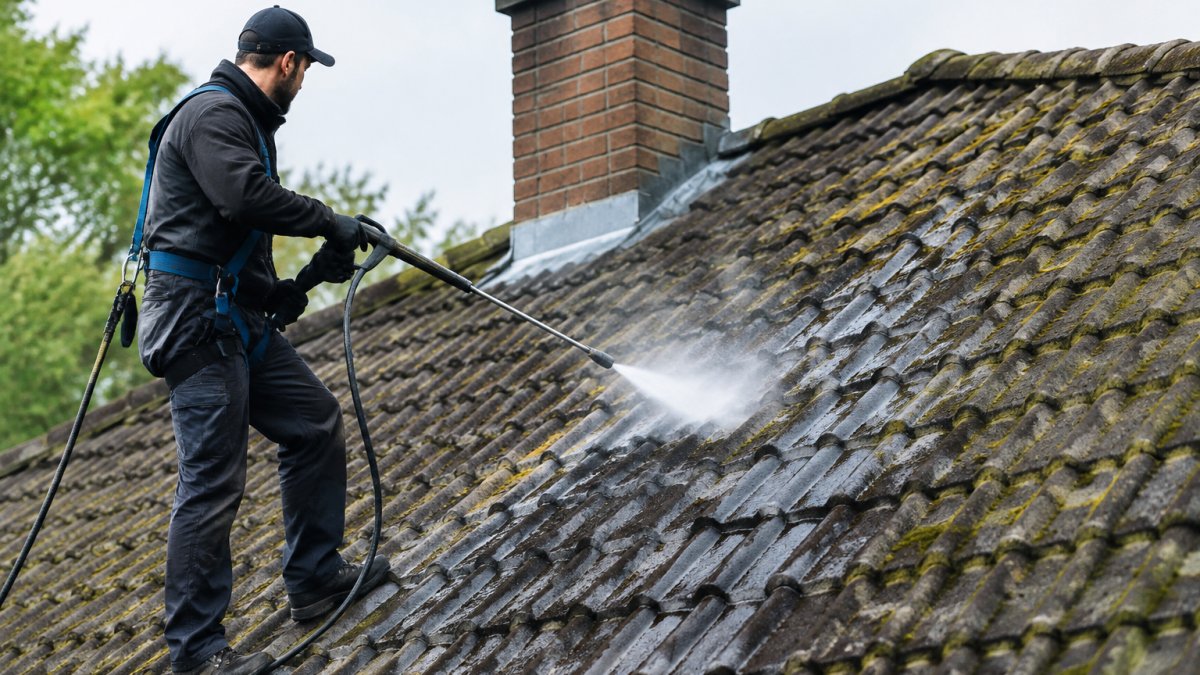
A pressure washer concentrates a lot of force onto a small area, and roof tiles were never designed to take that kind of hit. The jet can lift the edge of a tile, scour its surface, and push water into places water should never reach. Most of the harm is cumulative, which is why a roof can look clean on the day and still be worse off a year later.
Many people assume that if the tiles are not visibly broken, nothing has gone wrong. That is not always the case. Surface damage and loosened fixings can take time to show. Treat any high-pressure approach to roof tiles with caution, and ask whoever is doing the work how they will protect the roof.
Cracked, Loosened and Fractured Tiles
The most obvious risk is breakage, but the damage is rarely uniform across a roof. How a tile responds to a pressure jet depends on its material, its age, its condition and how it was fixed.
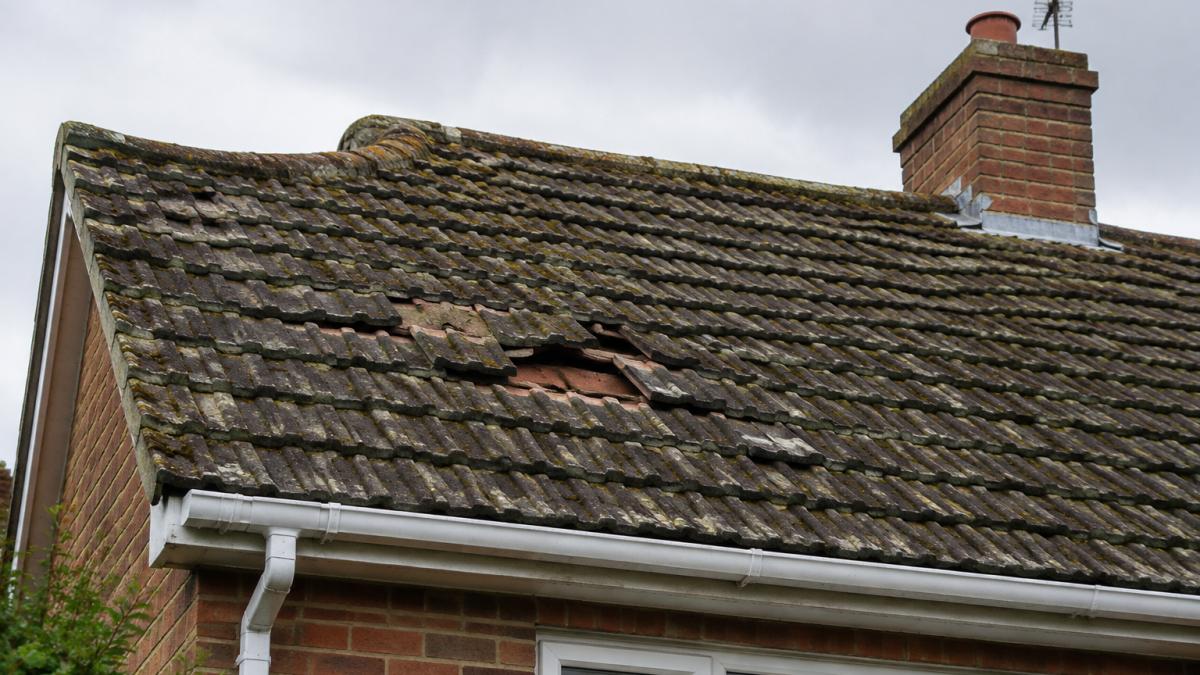
Concrete tiles. These are the most common covering on pitched roofs in the UK. Interlocking concrete tiles are relatively robust, but they are porous and often carry a factory-applied surface coating.
Clay tiles. Clay plain tiles and pantiles can be brittle, particularly after decades of freeze-thaw cycles. A direct blast can crack a tile outright or lift its lower edge so it no longer sits flat.
Slate. Natural slate is thin and splits along its cleavage planes. A high-pressure jet directed near an edge or a nail hole can cause a split that leaves a sharp, exposed edge for wind and rain to work on.
Age and condition. A roof that is 10 years old and sound behaves very differently from one that is 40 years old with brittle, sun-weathered tiles. Moss and lichen also hide defects: growth can bridge cracks and hold tiles in place, so blasting it off can reveal, or cause, movement that was not visible before.
Manufacturer guidance. Most tile manufacturers publish installation and maintenance instructions, and many specify that high-pressure washing is not recommended because it can void warranties or accelerate surface degradation.
How to inspect before and after. You do not need to walk the roof to spot problems. From the ground with binoculars, or from a ladder kept at a safe, stable position, look for:
- Tiles sitting at an odd angle or out of line with their neighbours
- Gaps in the covering where a tile has slipped
- Cracked, chipped or spalled faces
- Rusty or missing fixings visible at verges and eaves
- Granule loss or a chalky, eroded surface on concrete tiles
After any cleaning, repeat the check. A tile that has moved will let wind-driven rain in, and the first sign is often a damp patch on a ceiling or a draught in the loft rather than a visible break.
When to call a roofer. If you find displaced, cracked or missing tiles, do not wait for the next storm. A qualified roofer can re-seat or replace individual tiles and check the battens and underlay beneath.
Watch out: moss and lichen can mask existing cracks, so a roof that looks intact before cleaning may reveal defects once the growth is removed, budget for a post-clean inspection rather than assuming the job ends when the washer stops.
Damage to Protective Coatings and Tile Surfaces
Many modern tiles carry a protective coating or a glazed or sealed surface. That layer is what keeps moss, algae and water from getting into the body of the tile. A high-pressure jet can strip it away, leaving the tile porous and easier for growth to take hold again.
Surface erosion is another concern. Concrete tiles in particular can lose their fine top layer, which changes their texture and can speed up weathering. Once the surface is gone, you cannot simply wash it back. Ask yourself whether the cleaning method you are considering would remove the coating your roof depends on. If the answer is uncertain, pick a gentler approach.
Water Forced Beneath Tile Laps and Hidden Leaks
Tiles overlap at their laps, and the roof underlay beneath them is the real line of defence against water. A pressure jet can drive water up and under those laps, past the point where the underlay can shed it. That water can soak into the timber and insulation below, and the first sign is often a stain on a ceiling weeks or months later.
This is the risk homeowners most often miss, because the leak appears far from the cleaning job and nobody connects the two. If you have a damp patch after roof work, mention the date of the clean to your roofer. Early detection is far cheaper than repairing rotten timber.
Soft Washing Roof Tiles as a Safer Alternative
Soft washing uses a low-pressure flow of water combined with a biocide or cleaning solution. The solution does the work of killing moss, algae and lichen, and the water simply rinses it away. Because the pressure is low, the tiles and any protective surface are far less likely to be damaged.
Soft washing is generally regarded as the gentler option for most tiled roofs. To judge whether your roof actually needs professional cleaning, read how to spot when your roof needs cleaning. It takes a little longer, and it is not a magic cure for heavy growth, but it is less likely to damage the roof. Compare the two approaches on the points that matter to you:
| Factor | Pressure washing | Soft washing |
|---|---|---|
| Pressure used | High, concentrated jet | Low, flow-based |
| Risk to tiles | Cracking, loosening, erosion | Much lower |
| Risk to coatings | High | Low |
| Water under laps | Likely | Unlikely |
| Effect on moss | Removes surface growth | Kills and rinses growth |
| Best suited to | Few hard surfaces such as concrete paths | Pitched tiled roofs |
Pros of soft washing: gentler on tiles, protects coatings, lower risk of water ingress, and it can slow regrowth when a suitable treatment is used.
Cons of soft washing: it takes longer, it depends on the right chemistry and technique, and results can take several days to show as the treatment works through.
Pros of pressure washing: fast and effective at removing surface dirt on hard surfaces.
Cons of pressure washing: high risk to roof tiles, coatings and laps, and damage may not appear until later.
Commonly cited best practice is to choose soft washing for tiled roofs and reserve pressure washing for strong hard surfaces that cannot be damaged this way. Whoever does the job should be able to explain their method and why it suits your roof.
How to Remove Moss From Roof Tiles Safely
Moss removal is the reason most people book a roof clean, so it is worth doing it properly, and safely. For a detailed step-by-step method that avoids damaging the tiles, see step-by-step moss removal guide.
Assess whether you should be on the roof at all. Working at height is the leading cause of serious injury in domestic maintenance.
Ladder and access safety. Use a ladder rated for the load, place it on firm level ground at the correct angle (roughly one unit out for every four up), and secure it at the top where possible.
Electrical hazards. Look up before you start. Overhead power lines, satellite dishes, aerials and solar panels all create risks.
Protect people and property below. Keep children, pets and visitors clear of the working area. Move or cover garden furniture, cars and anything that could be stained by runoff.
Manage runoff and chemicals. Moss treatments and biocides can harm ponds, streams, plants and beneficial insects. Read the label, use the correct dilution, avoid applying before rain, and direct runoff away from drains that lead to watercourses where possible.
A safer sequence for moss removal:
- Check the roof first. Look for loose, cracked or slipped tiles from the ground or a stable ladder, and note anything that needs repair before cleaning.
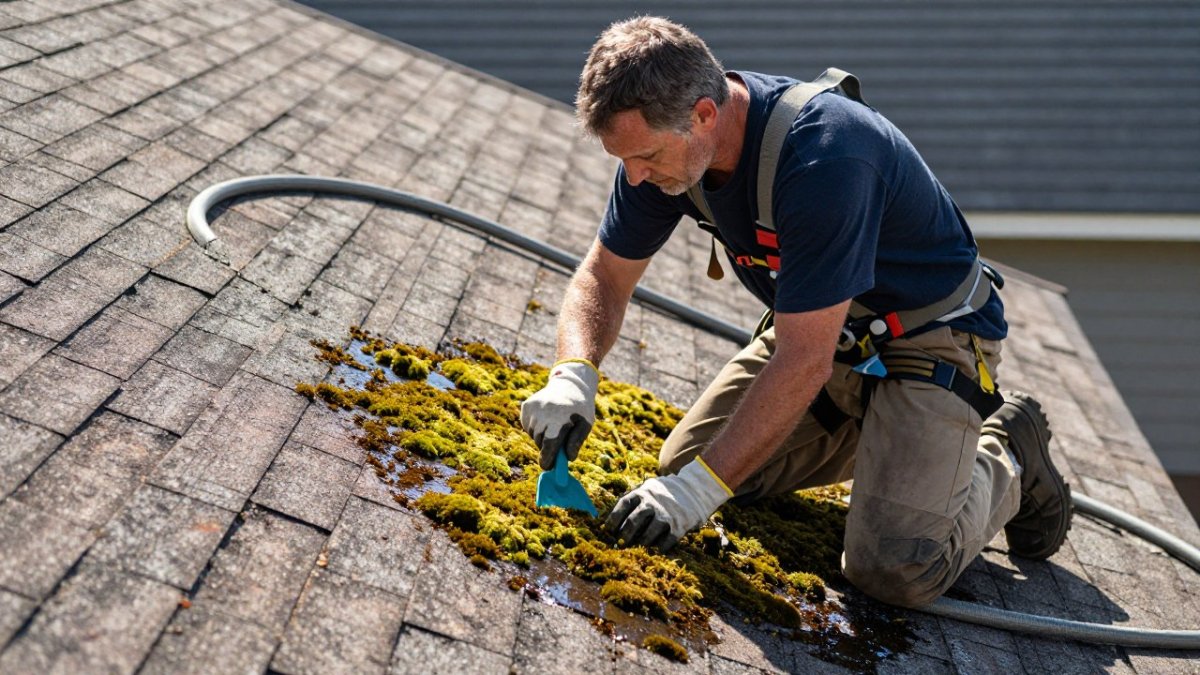
- Clear debris by hand. Remove leaves and loose moss with a soft brush or by hand, and clear the gutters so water can drain.
- Apply a suitable treatment. Use a moss treatment or biocide designed for roofs, following the label and the manufacturer's dilution instructions.
- Let it work. Allow the treatment to act, usually over several days, rather than blasting the growth off straight away.
- Rinse gently. Once the moss has died, rinse with a low-pressure flow of water to remove the dead growth.
- Check again. Look for any tiles that have moved during the process and arrange repairs.
Aftercare and what to do if something goes wrong. After cleaning, check ceilings, loft spaces and gutters for signs of water where it should not be.
Evidence and manufacturer guidance. Distinguish documented risks from broad claims. Tile manufacturers' instructions, product labels and independent guidance from roofing trade bodies are more reliable than marketing copy.
Watch out: a roof that looks safe from the ground can hide a rotten batten or a loose fixing, if a tile moves underfoot, stop and get the roof checked before continuing.
Roof Tile Cleaning Cost in the UK and Booking a Safe Clean
Roof cleaning pricing depends on the size and pitch of the roof, the type of tiles, the level of growth, and how much access equipment is needed. For current prices or a quote, please visit the website.
Be wary of very low quotes that suggest high-pressure cleaning as standard. Ask how the roof will be protected, what method will be used, and whether the work is insured. Those questions tell you far more than the headline price.
If you are ready to book, The roof cleaner can assess your roof and explain the method it would use for your tiles. You can request a free roof cleaning quote to get started. Ask for a quote, and get in touch to arrange a visit.
Choose a method that protects your roof rather than one that only looks quick. Your tiles, coatings and underlay all depend on it, and a leak is far more expensive than a gentle clean.
Frequently Asked Questions
Why does the NFRC advise against pressure washing roof tiles?
High-pressure cleaning of roof tiles can dislodge fixings, crack tiles and remove the protective surface layer that keeps water out, so low-pressure or soft washing methods are often preferred. Homeowners should ask any contractor which method they plan to use and whether the tile manufacturer's cleaning guidance has been checked before work starts.
Can high-pressure washing cause water ingress in the loft?
Yes. Pressure washing can lift the overlapping edges of tiles and push water sideways under the laps, where it reaches the roof underlay and can then find its way into the loft. Damage of this kind often goes unnoticed until staining appears on a ceiling or insulation is found wet months later. Checking the loft for damp after any roof clean and asking the contractor to inspect the underlay if tiles were loosened is a sensible precaution.
What is the difference between soft washing and pressure washing?
Pressure washing uses a high-volume jet of water to blast dirt away, while soft washing applies a biocidal cleaning solution at low pressure, allowing it to dwell on the surface and kill moss, algae and lichen at the root. Soft washing is generally considered safer for concrete and clay tiles because it does not erode the surface or force water under the laps. It can take a little longer to achieve the same result, but the roof is less likely to be damaged.
How can I safely remove moss from my roof without pressure washing?
Start by checking the roof from a safe position, ideally with binoculars, and avoid walking on fragile or slippery tiles. A low-pressure garden sprayer with a suitable biocidal moss treatment, applied according to the product label, will kill moss over a few weeks. Dead moss can then be gently brushed off with a soft broom, working from the ridge downwards. If the roof is steep or high, use a professional roof cleaner with appropriate insurance and working-at-height training instead of climbing up yourself.