 blog
Peak Roof Clean vs The Roof Moss Cleaners: Which to Pick
Quick Summary
Peak Roof Clean is a strong roof moss cleaners alternative for homeowners who want a clear comparison of method, cost and aftercare before booking. The article recommends getting written quotes from at least two providers and checking insurance, treatment method and guarantees first.
- Ask every provider whether they use soft washing or pressure washing, since pressure can damage roof tiles.
- Get a written quote after an inspection, because price depends on roof size, pitch, moss severity and access.
- Confirm whether the quote includes gutter clearing, disposal and any follow-up visit or guarantee.
- Ask for proof of current public liability insurance and how the firm manages fall protection.
- DIY may suit a small, low, accessible roof, but professionals are usually more cost-effective on steep or heavily mossed roofs.
Table of Contents
- Why Homeowners Look for a Roof Moss Cleaners Alternative
- Soft Washing vs Pressure Washing Roof Tiles
- How Roof Moss Treatment Works and How Long It Takes
- Roof Cleaning Cost in the UK: What Drives the Price
- DIY Cleaning vs Professional Service: A Cost-Effectiveness Comparison
- Choosing Between Roof Moss Removal Companies
- Booking Your Roof Clean: What to Check and Next Steps
- Frequently Asked Questions
Why Homeowners Look for a Roof Moss Cleaners Alternative
Moss on a roof does more than spoil the look of a house. It holds moisture against the tiles, can slow drainage, and makes a property look neglected from the street. When a homeowner decides it needs cleaning, they quickly find several names in the search results. Many people want to compare providers before they commit.
Some homeowners look for an alternative because they want a clearer picture of service and cost. Others are worried about how the tiles will be treated. A few simply want to see whether a smaller, locally run firm might suit a single house better than a national brand. Each of these reasons is reasonable, and each deserves a fair comparison.
This article covers cleaning methods, how treatment works, what drives the price, and what to check before booking. The aim is to help you decide which provider fits your roof.
Soft Washing vs Pressure Washing Roof Tiles
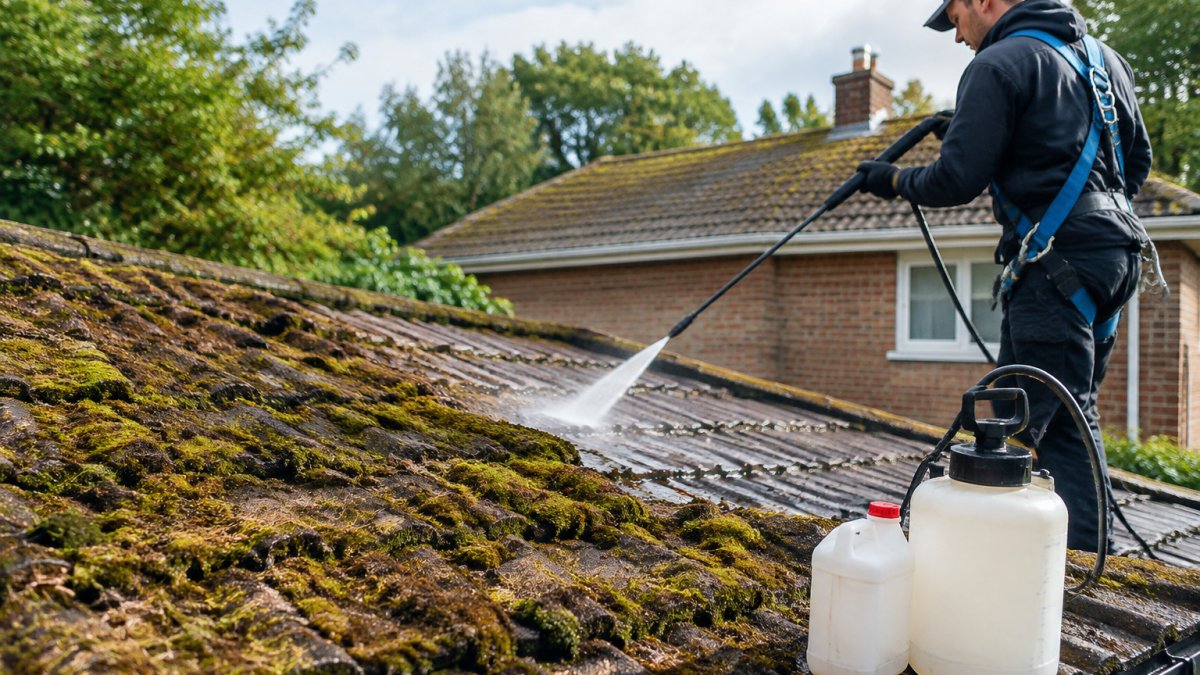
The most important question for many homeowners is how the roof will be cleaned. Pressure washing uses a high-powered jet of water. Soft washing uses a low-pressure spray of water mixed with a cleaning solution that kills moss and algae at the roots.
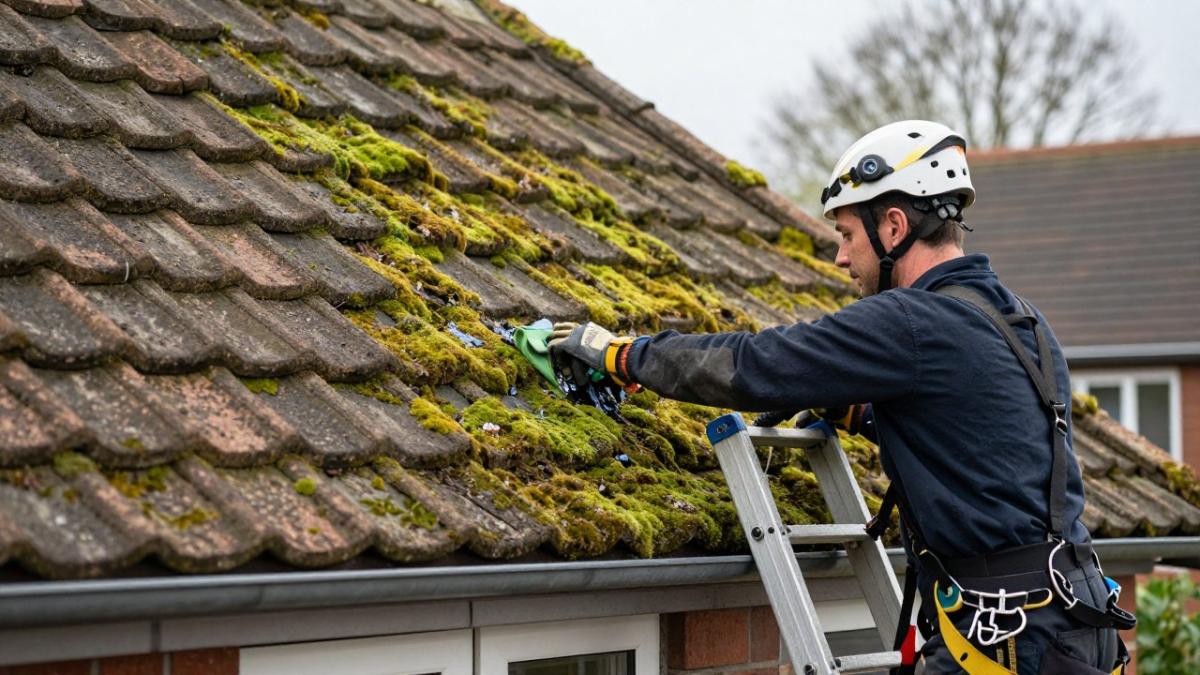
Pressure washing can damage roof tiles. Read the risks of pressure washing roof tiles and how to avoid them before you choose a method. The force can chip the surface, strip protective coatings, and loosen tiles that are already fragile. Soft washing relies on a chemical treatment rather than water pressure to do the work.
When you speak to any provider, ask which method they use. A reputable firm should explain the approach clearly and say how they protect your tiles and nearby plants. If a provider cannot answer that question, treat it as a warning sign.
How Roof Moss Treatment Works and How Long It Takes
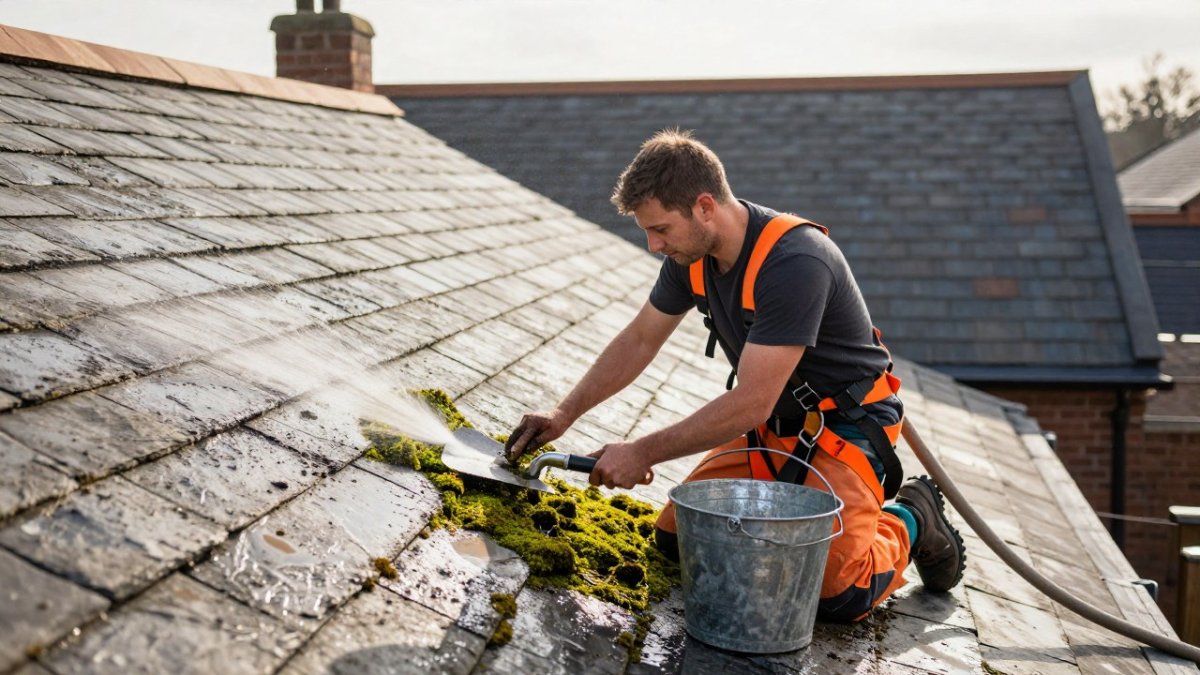
Moss treatment usually follows a set sequence. Our step-by-step guide to safely removing moss from roof tiles explains each stage. The technician first inspects the roof and checks the extent of growth. The treatment solution is then applied, left to work, and rinsed off once the moss has died. Dead moss often turns brown and can be brushed or washed away.
The time a treatment takes depends on the size and condition of the roof, and the solution may need a second application on heavily affected roofs. Dead moss takes time to fully weather away after treatment.
Ask each provider how long the treatment will take, how many visits are included, and whether a follow-up treatment is part of the quote. See the factors that decide how long a roof cleaning quote takes for more detail. Clear answers help you compare providers on equal terms.
Roof Cleaning Cost in the UK: What Drives the Price
Roof cleaning prices depend on the specifics of each roof. Understanding the main cost drivers can help you read and compare quotes.
Roof size and pitch. Steep pitches and complex roof shapes with valleys, dormers or multiple elevations take longer to access and treat safely, which can affect the quote.
Moss severity and type. Light green algae film is quick to treat. Thick moss cushions that have lifted tiles or blocked gutters need longer dwell times, mechanical removal before treatment, and sometimes a second visit.
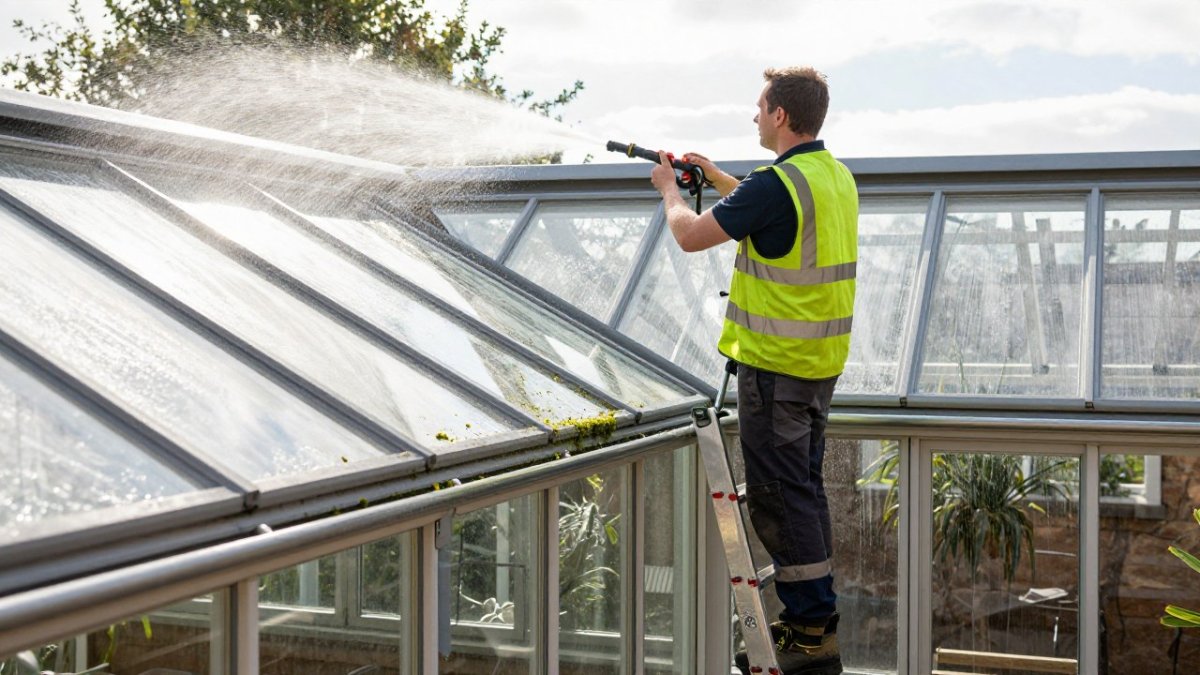
Access and height. Scaffolding, tower scaffolds or specialist access equipment can add cost, depending on how the roof can be reached safely. Restricted access, narrow side returns, conservatories, or glass roofs below the work area, also slows the job.
Treatment and disposal. Soft washing uses a biocide solution that must be applied at the correct dilution and rinsed according to the manufacturer's instructions. Some providers include gutter clearing and moss disposal in the quote; others charge extra. Ask whether the price covers clearing gutters, downpipes and any ground-level clean-up of fallen moss.
Aftercare and guarantees. A quote that includes a follow-up visit or a written guarantee against regrowth is not directly comparable with a one-off wash-and-go price. Compare the scope, not just the headline figure.
Always get a written quote based on an inspection, as pricing depends on the size, pitch and condition of your roof.
Ask for the price to be confirmed in writing after an inspection of the roof. You can learn how to get a free roof cleaning quote in the UK from our guide.
DIY Cleaning vs Professional Service: A Cost-Effectiveness Comparison
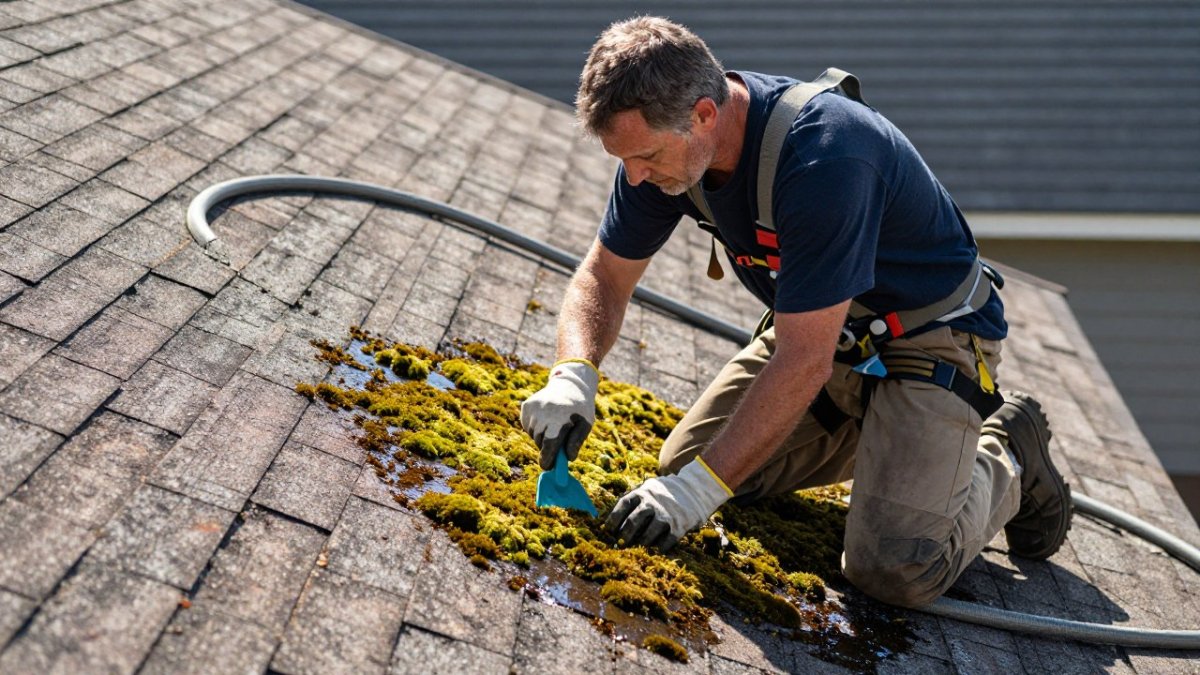
Many homeowners consider cleaning the roof themselves with a brush and a moss killer. This can work on a small, low, easy-to-reach roof. However, roof work carries real risk. Falls from height are a serious danger, and brushing or scrubbing tiles can damage them.
| Factor | DIY Cleaning | Professional Service |
|---|---|---|
| Upfront cost | Lower, mainly materials | Higher, covers labour and equipment |
| Safety | Higher risk when working at height | Trained staff with safety equipment |
| Tile protection | Risk of damage from brushing | Soft washing reduces damage risk |
| Time required | Often many hours or days | Usually completed in one visit |
| Guarantee | None | Varies by provider |
| Best for | Small, low, accessible roofs | Larger, steep or heavily mossed roofs |
Cost-effectiveness depends on your situation. DIY can save money on a low roof with light growth. A professional is usually more cost-effective on a large, steep or heavily mossed roof, where the risk and effort of DIY outweigh the savings.
Choosing Between Roof Moss Removal Companies
Most guides tell you to check insurance and read reviews. That is a start, but it does not help you choose between two firms that both look reputable. A more useful approach is to score each provider against the same criteria and compare the results side by side.
1. Insurance and accreditations. Ask for the provider's public liability insurance certificate, not just a verbal assurance. Ask the provider to confirm the level of public liability cover it holds. Check whether the policy is current and whether it covers work at height. For work on roofs, ask the firm how it manages fall protection.
2. Method and products. Ask which cleaning method is used (soft washing, pressure washing, or mechanical brushing), which biocide or moss treatment product is applied, and at what dilution. A provider should be able to name the product and confirm it is approved for use on roofs and safe for surrounding plants and pets once dry. If they cannot, that is a gap.
3. Scope of the quote. Compare what is included: moss removal, biocide treatment, gutter clearing, fascia and soffit cleaning, conservatory roof, and disposal of debris. A cheap quote that excludes gutter clearing may end up costing more than a mid-range quote that includes it.
4. Guarantee and aftercare. Ask for any guarantee in writing, including what it covers and what the remedy is.
5. Reviews and references. Look for reviews that mention the specific roof type and job size, not just star ratings. Ask for two or three recent local references you can contact. A firm that cannot supply any is a risk.
6. Complaints process. A written complaints procedure and a named contact are signs of a professionally run business. Ask what happens if you are not satisfied after the job.
Compare each provider against these criteria before deciding.
Take time to compare quotes before booking.
Booking Your Roof Clean: What to Check and Next Steps
Before you book, get a written quote from at least two providers. Make sure each quote states the method, the number of visits, and what is included. Ask about aftercare and what happens if the moss comes back.
Once you have chosen a provider, confirm the date, arrange access to the property, and ask how long the job will take. Keep the quote and any guarantee terms for your records.
If you would like a quote for your own roof, contact The Roof Cleaner. Our team is experienced and insured, and we are committed to complete customer satisfaction.
Frequently Asked Questions
What are the alternatives to The Roof Moss Cleaners?
Several UK firms offer roof moss removal. When comparing options, check whether each provider is fully insured and ask for written quotes that state what is included, such as gutters, fascias or aftercare, so you can compare like for like.
Is soft washing or pressure washing better for a roof?
Soft washing uses a low-pressure spray with a cleaning solution rather than high water pressure. Ask any provider which method it uses and why it suits your roof type.
How much does professional roof moss removal cost?
Pricing depends on the size and pitch of your roof, access difficulty, and whether gutters, fascias or conservatories are included. For current prices or a quote, visit The Roof Cleaner's website. Compare quotes that cover the same scope of work.
What should I check before hiring a roof cleaning company?
Confirm that the company holds public liability insurance. Check that the method suits your roof material, and request written terms covering any guarantee.